Aiming Reticle Types Illustration for Ta: A Guide to Precision and Strategy
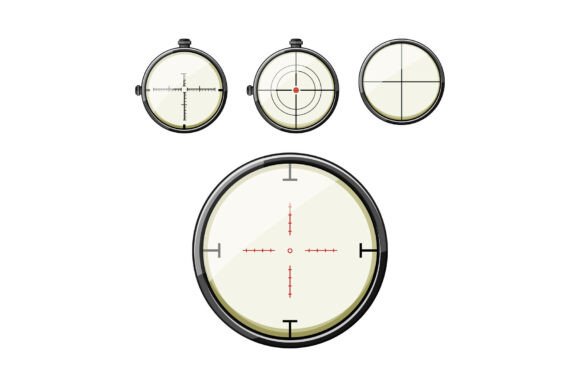
Understanding the various aiming reticle types is essential for anyone looking to improve their precision in gaming or tactical scenarios. Aiming Reticle Types Illustration for Ta provides a detailed visual representation of different crosshair designs, helping users choose the best option for their needs. This resource stands out by offering clarity, adaptability, and practical insights into how each design affects performance.
What Makes Aiming Reticle Types Illustration for Ta Unique?
Aiming Reticle Types Illustration for Ta is designed to be both informative and visually engaging. Unlike generic guides that offer limited explanations, this illustration covers a wide range of reticle styles, from simple dots to complex grids. It emphasizes how each type functions in different environments, making it a valuable tool for gamers, military personnel, and professionals involved in target acquisition.
The illustration includes examples such as the standard crosshair, the circle, the triangle, and the grid. Each design is accompanied by notes on its suitability for specific tasks, such as long-range shooting, close-quarters combat, or rapid targeting. This level of detail helps users make informed decisions based on their unique requirements.
Comparing Aiming Reticle Types Illustration for Ta with Other Options
While there are many resources available that explain reticle types, Aiming Reticle Types Illustration for Ta distinguishes itself through its structured approach and visual clarity. Traditional tutorials often focus on a single design or provide minimal context, whereas this illustration offers a comprehensive overview of multiple styles.
For example, compared to a basic online article that lists reticle types without visuals, Aiming Reticle Types Illustration for Ta provides a direct comparison. This makes it easier for users to grasp the differences between a dot reticle and a more intricate crosshair system. Similarly, when compared to interactive tools that simulate reticle behavior, this illustration remains accessible and straightforward.
It’s also worth noting that some platforms offer customizable reticles, allowing users to adjust size, color, and shape. While these features can be beneficial, they may not always align with the simplicity and clarity provided by Aiming Reticle Types Illustration for Ta. For users who prefer a structured reference, this resource remains a reliable choice.
Strengths and Tradeoffs of Different Reticle Designs
Each reticle type has its own set of advantages and limitations. The standard crosshair, for instance, is easy to use and effective in most situations. However, it may not provide enough visibility in low-light conditions. In contrast, a circle reticle can help with distance estimation but might be less precise for fast-moving targets.
The triangle reticle is often used in tactical scenarios because it allows for quick alignment and can indicate the direction of movement. However, it may require more practice to master. Grid-based reticles, commonly found in high-end scopes, offer advanced targeting options but can be overwhelming for beginners.
Aiming Reticle Types Illustration for Ta highlights these tradeoffs, enabling users to evaluate which design suits their goals. Whether the priority is speed, accuracy, or adaptability, the illustration provides the necessary context to make an informed decision.
When Aiming Reticle Types Illustration for Ta Is the Right Choice
Aiming Reticle Types Illustration for Ta is ideal for users who need a clear, visual guide to reticle designs. It is particularly useful for those new to gaming or tactical training, as it simplifies complex concepts without overwhelming the reader. For individuals looking to compare different reticle styles, this resource serves as a solid foundation for further exploration.
It is also beneficial for developers and designers creating custom aiming systems. By understanding the strengths and weaknesses of each design, they can tailor their solutions to specific use cases. Additionally, educators and trainers can use this illustration to teach students about the importance of reticle selection in real-world applications.
Situations Where Alternatives May Be More Suitable
While Aiming Reticle Types Illustration for Ta is a strong resource, there are scenarios where other options may be more appropriate. For instance, if a user requires real-time adjustments, a dynamic reticle tool that allows customization might be more effective. Similarly, those involved in competitive gaming may benefit from software that simulates reticle performance under different conditions.
In professional settings, such as law enforcement or military training, specialized equipment with advanced reticle systems may be necessary. These systems often include features like windage compensation or ballistic calculations, which go beyond the scope of a general illustration. In such cases, Aiming Reticle Types Illustration for Ta can still serve as a starting point, but additional tools may be required for optimal results.
Practical Examples and Use Cases
Consider a first-person shooter (FPS) player who prefers a minimalist approach. They might find the standard crosshair in Aiming Reticle Types Illustration for Ta to be sufficient for their needs. On the other hand, a player engaged in long-range sniping could benefit from a more detailed grid or circle reticle, as described in the illustration.
In a tactical training environment, instructors might use Aiming Reticle Types Illustration for Ta to demonstrate how different designs affect accuracy and reaction time. By analyzing these examples, trainees can better understand the impact of their choices and refine their techniques accordingly.
For game developers, the illustration can serve as a reference when designing aiming systems. It helps them identify popular reticle styles and consider how they might influence player experience. This knowledge can lead to more intuitive and effective gameplay mechanics.
Making an Informed Decision
Choosing the right reticle type depends on a variety of factors, including personal preference, task requirements, and environmental conditions. Aiming Reticle Types Illustration for Ta provides the necessary information to navigate these choices effectively. However, it is important to recognize that no single design is universally superior.
Readers should consider their specific needs and test different reticle types in real-world scenarios. Whether using this illustration as a starting point or combining it with other resources, the goal is to find a balance between functionality, usability, and performance.