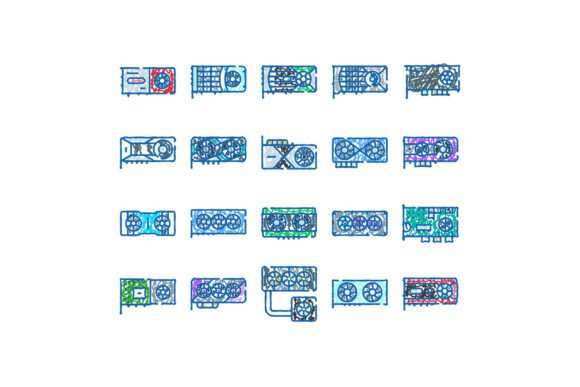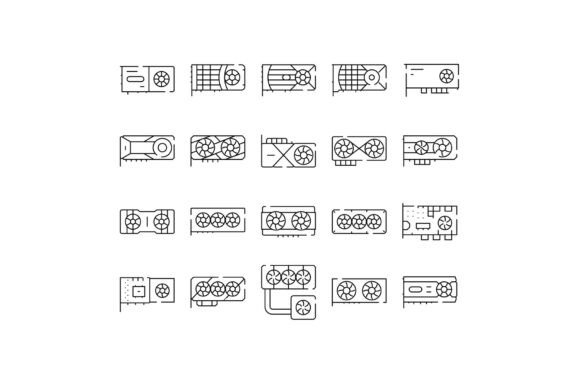
Computer Graphic Cards Hardware Components
Computer graphic cards hardware components are essential for modern computing, especially in fields that demand high-performance processing. Whether you're a gamer, cryptocurrency miner, or involved in high-performance computing, understanding the key elements of a graphics card can significantly impact your workflow and results. These components work together to deliver accelerated processing for digital tasks, making them a critical part of any advanced system.
Understanding Computer Graphic Cards Hardware Components
At its core, a computer graphic card, also known as a GPU (Graphics Processing Unit), is a specialized electronic circuit designed to rapidly manipulate and alter memory to accelerate the creation of images. While primarily associated with rendering visuals, modern GPUs have evolved to handle a wide range of computational tasks. This versatility makes them valuable not just for gaming but also for applications like cryptocurrency mining and scientific research.
The importance of computer graphic cards hardware components lies in their ability to offload complex calculations from the CPU, allowing for more efficient and faster processing. This is particularly beneficial in scenarios where large amounts of data need to be processed simultaneously, such as in machine learning or 3D rendering.
Key Characteristics of Computer Graphic Cards Hardware Components
Several key characteristics define the performance and capabilities of computer graphic cards hardware components. One of the most significant is the number of cores or CUDA cores (in NVIDIA GPUs) that are available for parallel processing. More cores mean the ability to handle more tasks at once, which is crucial for intensive applications.
Another important factor is the amount of VRAM (Video Random Access Memory). This dedicated memory is used to store textures, frame buffers, and other graphical data. The higher the VRAM, the better the card can handle high-resolution textures and complex scenes without slowing down.
Additionally, clock speeds and memory bandwidth play a role in determining how quickly the GPU can process information. Higher clock speeds and wider memory buses allow for faster data transfer, which translates to smoother performance in demanding applications.
Common Hardware Components in a Graphics Card
- GPU Chip: The central processor responsible for rendering graphics and executing computational tasks.
- VRAM: Dedicated memory used to store graphical data and improve performance.
- Cooling System: Ensures the GPU remains within safe operating temperatures during heavy workloads.
- Power Delivery Components: Include voltage regulators and capacitors that supply stable power to the GPU.
- Output Ports: Allow connection to monitors and other display devices.
Performance in Real-World Applications
In gaming, computer graphic cards hardware components are crucial for delivering smooth frame rates and high-resolution visuals. A powerful GPU can render detailed environments and complex animations without lag, enhancing the overall gaming experience. For serious gamers, investing in a high-end GPU can make a noticeable difference in performance, especially in graphically intensive titles.
Cryptocurrency mining relies heavily on the parallel processing capabilities of GPUs. Miners use computer graphic cards hardware components to solve complex mathematical problems, contributing to the security and operation of blockchain networks. The efficiency and hash rate of a GPU directly affect the profitability of mining operations.
High-performance computing (HPC) benefits from the massive parallelism offered by GPUs. Researchers and scientists use these components for simulations, data analysis, and machine learning tasks. The ability to process vast datasets quickly makes GPUs an invaluable tool in these fields.
Quality, Usability, and Long-Term Value
The quality of computer graphic cards hardware components varies depending on the manufacturer and model. Leading brands like NVIDIA and AMD produce reliable and high-performing GPUs that are widely used across different industries. When choosing a GPU, it's important to consider factors such as build quality, cooling efficiency, and warranty support.
Usability is another key aspect. Some GPUs are designed for ease of installation and compatibility with a wide range of systems, while others may require specific motherboard configurations or additional power supplies. Understanding your system's requirements before purchasing a GPU can help avoid compatibility issues.
Long-term value depends on how well the GPU can meet future demands. High-end models often offer better scalability and support for newer technologies, ensuring they remain relevant for longer periods. However, budget-friendly options can still provide excellent performance for less demanding tasks.
Who Benefits Most from Computer Graphic Cards Hardware Components
Gamers seeking immersive experiences will find computer graphic cards hardware components essential for achieving high frame rates and visual fidelity. Enthusiasts who want to push the limits of their systems may invest in top-tier GPUs to enjoy the latest games at maximum settings.
Cryptocurrency miners benefit from the parallel processing power of GPUs, making them a popular choice for those looking to participate in blockchain networks. The right GPU can significantly impact mining efficiency and profitability.
Researchers and professionals in fields like artificial intelligence, data science, and engineering also rely on computer graphic cards hardware components for complex computations. These individuals often require GPUs with high VRAM and strong processing capabilities to handle large datasets and simulations.
Practical Recommendations and Limitations
When selecting a GPU, consider your specific needs and budget. For gaming, a mid-range to high-end GPU will provide the best balance of performance and cost. For mining, focus on models with high hash rates and efficient power consumption. In HPC environments, look for GPUs with ample VRAM and support for advanced computing frameworks.
It's also important to recognize the limitations of computer graphic cards hardware components. While they excel at parallel processing, they may not be the best choice for all tasks. CPUs are still superior for single-threaded operations, and some applications may not fully utilize GPU capabilities.
Ultimately, the right GPU depends on your goals and workflow. By understanding the key components and their roles, you can make an informed decision that aligns with your needs and expectations.